Nada Al-Ahdal, a Yemeni girl who fled child marriage, nominated for the world children's Nobel prize

Rula Asfour, Amman
On the morning of 7 July 2013, Nada Al-Ahdal (then 10 years old) found that her shoes were in her parents' bedroom. She knocked on the door, imagining herself facing her mother as she came out of the room and saying to her, “Hand me my shoes… I have decided to run away from home”.
Nada tells Al Jazeera Net “Luckily nobody answered, so without thinking I headed for the front door of the house… I put on my father's shoes and went out to my uncle Abdulsalam's house. I did not find him, so I went to the nearest cabin (a phone booth) and called him, but he did not answer. I called his friend, who confirmed that my uncle had travelled outside Yemen. I asked him to help me, especially as his wife is my friend, and the two of them gave in when I threatened to turn to someone else”.
What did you do next? She replies, “I went with my friend to the city of Hodeidah in western Yemen, six hours from Sanaa, and recorded a two-minute video as a message to my uncle to tell him about the pressure my family was putting on me because I refused to be married in place of my sister after she had set fire to herself”.
She adds, “I posted the video on YouTube and was astonished that it was watched eight million times and translated into 40 world languages within three days. After that I learned that my family had reported to the police that I had been kidnapped. So I went with my friend to Sanaa and sought refuge at the Ministry of the Interior”.
The only saviour
Nada grew up and lived in Hodeidah. Every summer holiday Abdulsalam would take three or four girls with him to study English and computing in Sanaa. When her turn came in the summer of 2013, her father came and took her away on the pretext that she should stay with them in Sanaa until her sister recovered.
She then learned that she had been contracted in marriage to the man who had been her sister's fiancé, so she decided to run away the day before her wedding. She chose to turn to her uncle because he cared about the education of the family's girls; she saw him as her only saviour.

A few days later Abdulsalam saw the video through his friends, who had helped spread it on his personal Facebook page. He left his work, returned to Sanaa and found Nada at the Ministry of the Interior. They questioned him and her family; the marriage contract was annulled, and the family signed a document binding them not to marry Nada off before the age of 18. She was handed over to her uncle at her own request, because she considers him a great person and a blessing that will not come twice in her life.
A substitute in a crime!
People believe she is a girl rebelling against the customs and traditions of her family and society, but the truth is that she was afraid because of the suicide of her aunt at thirteen, after being tortured following her marriage, and because her sister set fire to herself at twelve, terrified of becoming a victim like their aunt.
These tragic experiences made her refuse to be a substitute in a crime committed by her family in front of everyone's silence.
The truth about her "exploitation"
Nada feels no regret, even though she was threatened by groups with influence in Yemen's official institutions, so that her story would not affect the National Dialogue Conference, which was approving the new Yemeni constitution at the time.
They also used an organisation bearing a human rights name which cast doubt on her story and claimed that she had been exploited. She was then held in a girls' care home on the pretext that she should not live with her uncle Abdulsalam because he was single, but the real aim was to hide her so that parliament would not pass a law prohibiting the marriage of minors.
After the constitution was approved, her uncle married so that the authorities could be sure she was living in a safe place, and she lived with him and his wife, whom she regards as her mother, sister and friend.
Among the most beautiful things Nada heard after leaving the care home, from the activists she met, was that she had brought about a change in the marriage of minors that the struggles of human rights organisations had not, which strengthened her determination and her strength.
Helping her generation
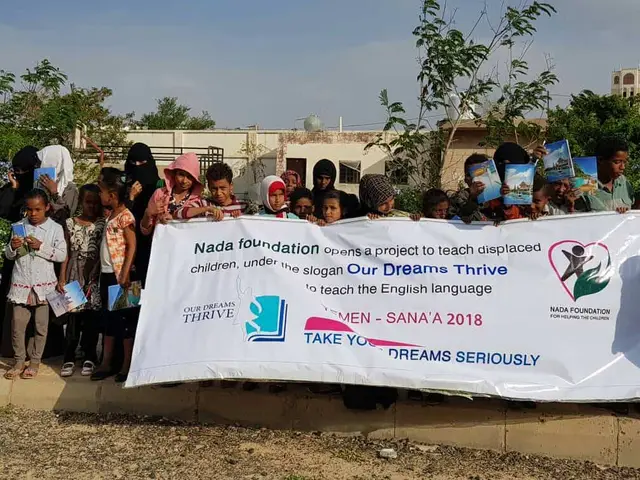
Nada set up the Nada Foundation for the Protection of Children's Rights, funded by Abdulsalam with 80% of his salary, as well as the income from her book “Nada of the Morning”, which tells her story. It was published in French in 2015 by the Michel publishing house, has been translated into Dutch and German, and will be translated into seven languages.
The foundation's members work as volunteers, hoping to find supporters in order to have the greatest impact on the coming generations. Over three years, the Safe Havens project to help girls was funded, as well as the Our Dreams Come True project, which aims to teach English to 10,000 girls; there are currently eight classes in which 500 girls are learning.
Ten years old and divorced
Nada played a role in the film “I Am Nojoom, Age 10 and Divorced”, rescuing Nojoom from marriage and selling the ring on her hand to buy toys and enjoy her rights as a child. The film won a number of awards and was nominated for an Oscar; she took part because it reflects her conviction of the importance of cinema, the media, social networks and human rights activists in raising awareness of the danger of marrying off minors.
The kidnapping of Nada and her uncle
The hardest experience she lived through was when she and her uncle Abdulsalam were kidnapped in 2015 by Al-Qaeda for 14 days because of her human rights activism and her incitement against customs and traditions, in the group's view.
Nada says, “They interrogated us and forced us to attend lectures to persuade us to stop our activities. We were released after the southern media broadcast the news that we had been kidnapped by Al-Qaeda, and in the same year we travelled outside Yemen”.
The Nobel prize
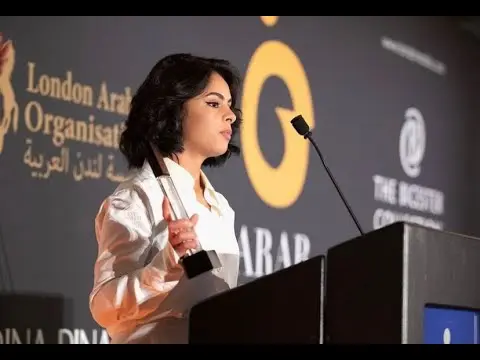
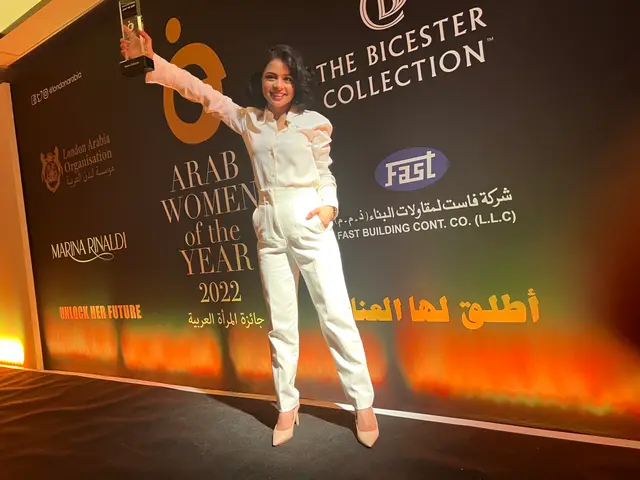
On her nomination for the World Children's Nobel Prize for 2018, she says, “I believe that the real person who influences society is the one who works on the ground. Titles and awards do not matter to me, and I am proud that there are influential children who have become peacemakers”.
Support and hopes
On her relationship with her father, her mother and her ten brothers and sisters, Nada says, “They have come to support me and are partners in changing society. I persuaded them to stop my younger sister's marriage. I am as proud of them as they are of me”.
She adds, “Our life as refugees has deprived me of education. In one Arab country they refused to accept me in schools on the pretext that my influence on the girls would be negative, and a year later I was asked to study from home to protect them”.
Nada is preparing to travel soon to South Africa to study English, as one of her steps towards her dream of studying law to help the girls of her society.
Uncle Abdulsalam
Abdulsalam, who rejects injustice because he suffered violence as a child, says, “Sadly, Yemeni society treats a female as a disgrace, with nothing for her but her husband and her grave”.
He sees the accusation that he exploits and incites her as inevitable, since every cause has its opponents. He focuses on his role as Nada's guardian, raising her cultural awareness and protecting her, and thinks of nothing but helping her to complete her studies.
Source: Al Jazeera (opens in a new tab)