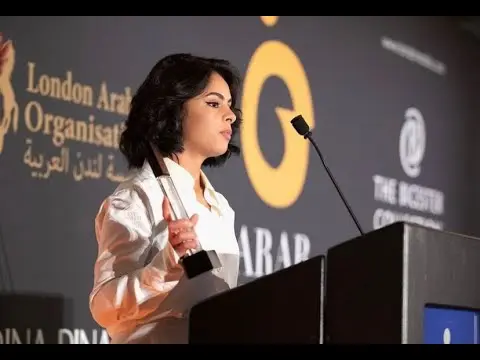
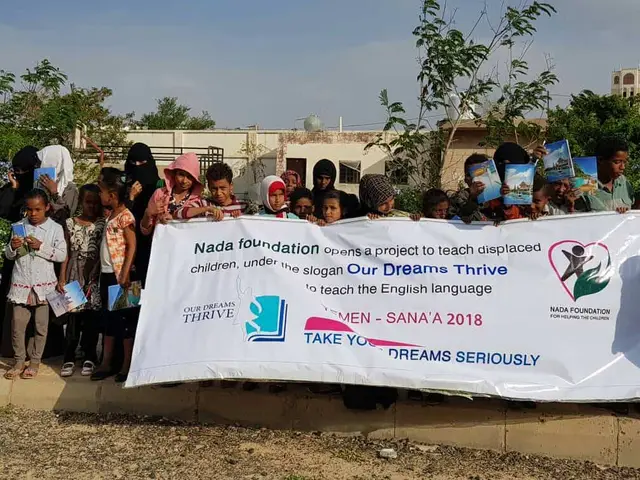
Have you heard the story of the young Nada Al-Ahdal and her courage?

The Arab and Western worlds have shared the story of the Yemeni child Nada Al-Ahdal since 2013, and Nada is back in the spotlight once again after fleeing with her uncle to the Al-Wadiah border crossing with Saudi Arabia, and specifically to an emergency shelter camp called “Al-Abr Camp”, supervised by the “King Salman Humanitarian Aid and Relief Centre”. Nada and her uncle stayed there for four days, during which she posted a video thanking the Custodian of the Two Holy Mosques, King Salman bin Abdulaziz, and the Centre for the care the displaced receive in the camp.
The story did not end there: more happy news followed for Nada when a swift reply came from the Centre inviting her to the Kingdom, so that she could receive the care and the chances in life she had wished and striven for, with her uncle at her side. Nada is now in the second year of intermediate school at a school in the capital, Riyadh, and dreams of achieving the future she longs for and a safe life after the suffering of past years.
The story of Nada Al-Ahdal
Nada Al-Ahdal was born to a poor family in a village in the Yemeni governorate of Hodeidah. Her parents decided to marry her off when she was 10 years old, and she found no way to refuse except to run away. Her story began in 2013, when she set out on her journey to freedom alongside her uncle, who stood by her despite all the difficulties.
Nada’s story began to spread after a video on “YouTube” in which she explained her story after fleeing to her uncle in Sanaa. It received 6 million views in its first three days and brought her great sympathy and solidarity from the Arab and Western worlds. Nada then lived in Sanaa for about two years, during which she completed her studies up to the seventh grade. During that period she received two international awards from human rights organisations in Switzerland, as well as the award for “the bravest child in the world”, and she took part in civil and humanitarian organisations concerned with children’s rights. But Nada’s story of suffering did not end after the recent military coups in Yemen, which forced her to move to Aden after she tried to travel and was prevented by the Houthis. Events followed one another until Nada and her uncle managed to escape to the camp run by the King Salman Centre, and so came back to life once again.