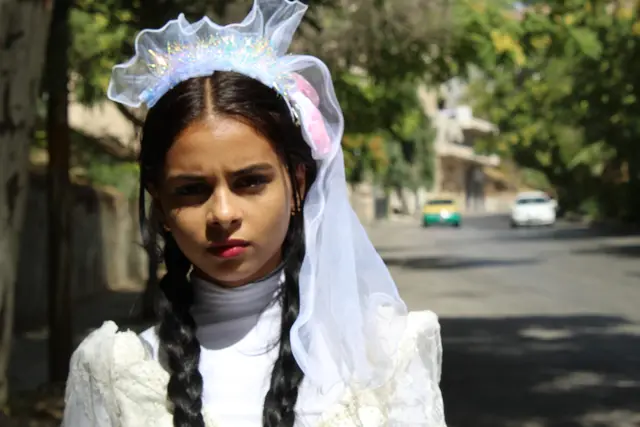
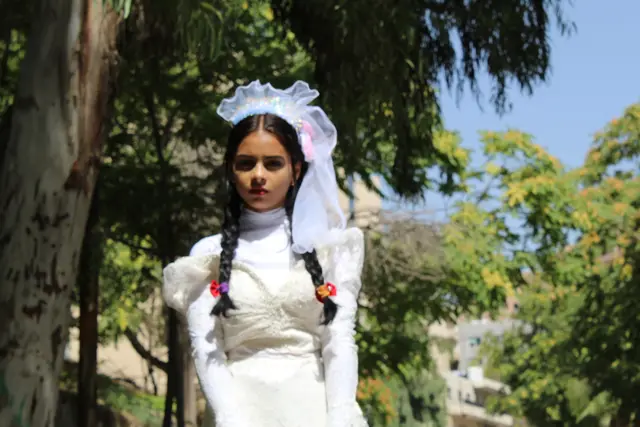
Child marriage | Empowering girls rescued from child marriage
To end child marriage
After spending 15 years photographing child marriages around the world, Stephanie Sinclair is uniquely placed to understand their lasting impact on communities, especially on the girls who were forced to marry against their will. “You can’t expect individuals who have been severely abused to behave normally as soon as they are out of that situation,” she said. “They need care, and to be given the time and the tools they need to heal.”
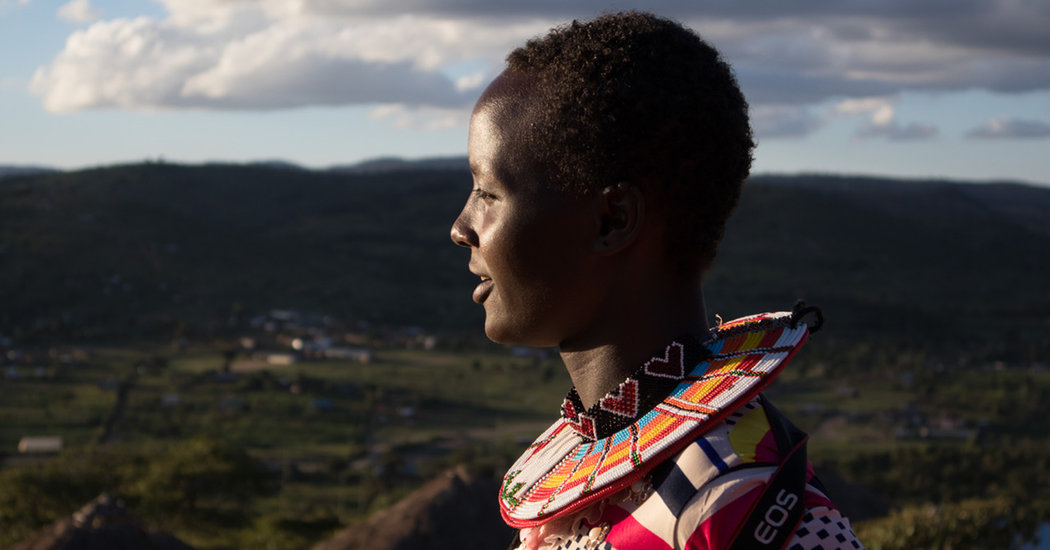
With that in mind, last year Ms Sinclair started the Tehani Photo Workshop – named after an 8-year-old Yemeni bride – in partnership with the Samburu Girls Foundation. The Kenyan organisation, led by Josephine Kulea, focuses on educating girls rescued from child marriage, female genital mutilation and beading, a tradition in which girls adorned with red beads are required to meet the demands of an older male relative.
“Research shows that when girls are empowered and have strong bonds outside the family, they have a better chance of protecting themselves and their futures,” said Ms Sinclair. Looking at her own career, she felt that photography could be a way to help these girls. “The independence that comes with such a profession, the knowledge you gain by meeting other people, and the freedom the camera gives you to express yourself cannot be underestimated,” she said. “Instinctively, I knew that a photography workshop could nurture the girls in a unique way.”

Twice now, girls aged 12 to 16 have gathered at the Ngari Hill Eco-Lodge for five days to talk about pictures and the place of women in society. Ms Sinclair shares her long-term project, which helps the participants understand that this is a global problem affecting one girl every two seconds; that it is the result of women not being valued as they should be; and that what they went through is not their fault. She also introduces basic photographic concepts, using examples from her own work or from that of strong African women. The aim is to inspire them while also teaching them photography skills, before they are paired with another participant and joined by a mentor from the previous workshop to make pictures in the surrounding hills.
“A lot of the pictures they took speak to the different moments in their lives,” said Ms Sinclair. “This year, many of them re-enacted what happened to them. In one, Jacqueline holds up her beaded necklace while wearing her school uniform, trying to show how beading cuts off education. In another, Nashaki leans against a branch far above the ground. “I was worried they would fall when I first saw them climbing, but they told me how, when they fled their marriages and hid in the forest, they would sleep in the trees to protect themselves from the animals in the wild,” Ms Sinclair recalled.
Others hint at the growing bonds between the girls, as in a picture of Lynette and Eunice laughing in their room, or of Susan and Silvana walking arm in arm, and also in the portraits they made of one another. Only when the sitter and the photographer are in tune do you get pictures that capture both vulnerability and strength.

The workshop culminates in a community exhibition and presentation in which they talk about what matters most to them. Each time, Ms Sinclair said, they felt compelled to share what they had been through, how it had affected them, why girls’ lives matter and why they should have the same opportunities as boys. In short, how girls can do anything, a line they often repeated in their remarks. The message resonated strongly with those attending. It came not only from those who had lived through this ordeal, but also from members of the community, female relatives and young women who speak the same language and share the same cultural background.
“They say that every empowered girl affects at least 250 people in her community,” said Ms Sinclair. “Although we have only had 22 students so far, their numbers are slowly adding up.”
She hopes to hold more workshops, in Kenya and elsewhere, as long as her non-profit “Too Young to Wed“ continues to receive funding and logistical support to do its work without taking any shortcuts.
“You want these workshops to be intimate, because healing is not a group process,” she said. “It is not only the photography that helps; it is bringing together girls who have all suffered a similar kind of trauma for what is really a retreat, a time to nurture, grow and build community.”
Follow @2young2wed and @nytimesphoto on Twitter. Follow “Too Young to Wed” on Instagram. You can also find Lens on Facebook and Instagram.