Child marriage | As the world makes gains against child marriage, Nepal struggles to catch up
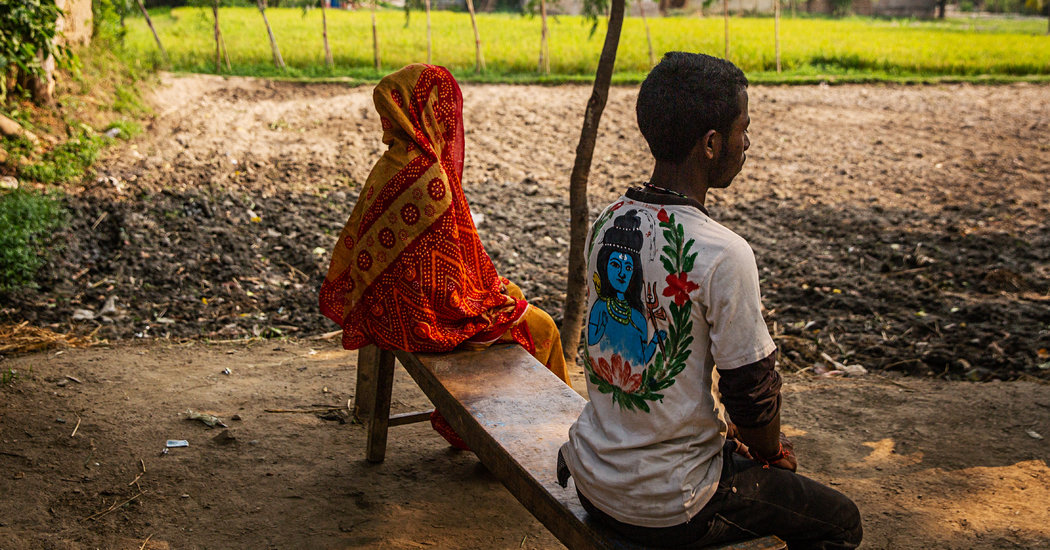

Gorgama, Nepal – In the hot southern plains of Nepal, Rajesh Sada’s mother wanted to live to see the marriage of her 16-year-old child before she succumbed to tuberculosis.
It took only a few days to find a bride. In March, several days before his mother died, Rajesh exchanged vows – with a 15-year-old girl he did not know. Five of his brothers – all of them married as teenagers – smiled and congratulated him. They saw no reason to question the moment.
“I don’t think there is anything wrong with child marriage,” Rajesh said recently outside his small hut made of mud, stone and dried grass. “It happens everywhere here. It is expected.”
In many parts of the world the battle against child marriage is being won, with global rates falling sharply over the past decade, largely because of progress in South Asia. But the story is complicated in Nepal, one of the poorest countries in the region, where activists say such marriages are increasing in some villages.
According to new data released on Friday by UNICEF, about 765 million people alive today were married as children. UNICEF found that Nepal has some of the highest rates of such marriages in the world, even though the practice has technically been illegal since 1963.
UNICEF reported that about 40 per cent of Nepali women aged 20 to 24 were married by the age of 18, and the country also has an unusually large number of young grooms, a little-studied population that nonetheless faces unique social pressures.
Nepal’s government is pressing ahead with a campaign to eliminate the practice in the coming years. Many activists say the challenges are daunting.
In rural areas, activists say, some elected local officials who publicly oppose the practice still marry off their own teenage children. Literacy rates are low. Social media and mobile phones have made it easier to find potential partners. And many in Nepal see the practice as reasonable given the harsh economic constraints in their communities.
“It is very difficult to change people’s thinking,” said Ram Bahadur Chand, an official at Nepal’s Child Welfare Board. “They don’t see that child marriage destroys their future. It is a kind of violence.”
Nepal has tried to make major strides. The government recently raised the minimum age of marriage for women by two years, to 20, matching the age for men. In January, officials announced cash incentives and bicycles for families who kept their daughters in school. Activists have organised along Nepal’s border with India to intercept young brides at risk of being trafficked into prostitution. The country has pledged to end child marriage by 2030, and in some areas much sooner.
But the government’s efforts have had limited success. Besides poverty and a lack of education, activists say, the problem is partly tied to the nature of work in Nepal, a rugged, mountainous country propped up by remittances from citizens working abroad.
Every year, hundreds of thousands of men leave Nepal for gruelling jobs in the Persian Gulf. For poor families, marrying their daughters to boys before they go abroad is seen as both financially beneficial and a necessity. When the villages are empty of men, “families need girls to take care of the elderly and handle household activities,” said Tarak Dhital, a social activist in Kathmandu, the capital of Nepal.
Girls are taken out of school as soon as they begin menstruating, a sign for some families that they are ready for marriage. The unions are often tied to the exchange of an illegal dowry. In some Nepali communities, women who wait until they are older to marry are expected to give the husband’s family a larger share of land or money.
“That is why poor people stop sending their daughters to school and are forced to find a groom,” said Santara Paswan, 26, an activist from southern Nepal, who said her parents forced her to marry at the age of fifteen. “
The pressure from parents is often immense. Rakesh Sada, 19, who is not related to the 16-year-old Rajesh Sada, was married to his wife, Punti Sada, 18, three years ago at the insistence of Rakesh’s mother. During that time, Rakesh said, his feelings of resentment about his early marriage have grown.
They already have two young children. Punti spends part of her days giving oil massages to Rakesh’s mother, who said she was happy with the marriage. Rakesh makes a meagre living driving a tractor in the southern district of Saptari.
He has vowed not to let his daughters marry until they are at least 20. “I have no other choice but to raise my family in a better way, send my children to good schools and prepare for their future,” he said.
But the consequences of marrying at such an early age were not yet clear to Rajesh Sada, who has soft features and a shaved head. In his village, Gorgama, where a few hundred labourers toil at brick kilns, money is hard to come by and most people drop out of school.
With his mother now dead, Rajesh said, his wife, Punita, who has moved into the family home, looks after his father and runs the household. During the day, Rajesh makes about $5 working on a construction site. He plans to leave for the Persian Gulf to earn enough money to build a new house. Early marriage, he said, was unavoidable.
“My father is old, so I had to get married,” he said. “I have no education. I couldn’t continue at school because I didn’t have enough resources. I don’t have big dreams.”
As Rajesh spoke with a journalist, a group of villagers crowded around him, and Punita, who had moved to Gorgama from a nearby village, kept her face covered with a bright sari. When asked for her thoughts, she fled inside the couple’s house and did not come out.
Later, in a brief interview, she said that her parents had found Rajesh and that she had no choice but to comply with their demands to marry him.
“I am an illiterate girl,” she said. “I have nothing to say about child marriage.”
News source (opens in a new tab)
A reminder, to end child marriage – Nada Foundation for the Protection of Girls’ Rights (opens in a new tab)