Tanzania Ending Child Marriage Network – TECMN
A UNITED STATEMENT OF POLITICAL ASSOCIATIONS ON GIVING TECHNICAL OPPORTUNITIES TO RETURN TO THE SCHOOL AFTER OPENING: #ArudiShule
We civil society in Tanzania today came together to discuss the importance of giving girls a chance to return to school after childbirth. Our goal is to see girls get opportunities that will enable them to achieve their dreams and have a better life. According to the 2012 Census, 51 percent of Tanzanians are women and girls. Whatever is affecting this group is affecting the whole nation. Educating girls and women ensures sustainable development for the nation.
It should be noted that Tanzanian girls face many obstacles in their journey to education including poor learning environment, non-adherence to special needs of girl children, sexual abuse and long distances between residential and school.
In addition to being Civil Society Organizations in Tanzania we are also parents, community members and patriots, so we ask our Government to listen to us.
What do citizens say?
According to a Voice of Citizens Survey (2016) 71 percent of Tanzanians say girls should be given the opportunity to go back to school to continue postnatal education. It should be noted that education in public schools is funded by the taxes of citizens who made the comments.
What do our policies, our commitments and our leaders say?
The Revolutionary Party’s mandate issued to guide our nation makes it clear that pregnant girls will be given the opportunity to return to school after giving birth. Also the 2014 Education and Vocational Education Policy makes it clear that the Government will remove the barriers to education for all children in Tanzania.
We also recognize that the Government was growing eager to see these girls get the right to further education. We CSOs collaborated with the Government in the process of developing policies and guidelines that would enable these girls to continue their education in the formal process. So we pray that this good will continue.
What do our laws say?
Under the Child Act of 2009 and other laws of our country a child is recognized as anyone under the age of 18. These laws provide the right of all children to receive education without any discrimination including pregnancy. And it should be remembered that Tanzania is among the most governed by law.
What do girls say?
It is not true that girls who get pregnant while in school are criminals who deserve the punishment of being denied their dreams. Many of them lack proper education about their rights and responsibilities and are victims of rape cases. Our laws have explicitly stated that engaging in sexual activity with a child under 18 is rape. Studies show that three out of ten girls engaged in sexual activity for the first time without their consent. (UNICEF, CDC and MUHAS, 2009) more than half of the girls said the perpetrators of the rape were the most powerful people; of which 32 percent are neighbors, 15 percent are those in power and 7 percent are siblings.
Please note that pregnancy is not the only challenge facing girls as they face more challenges than boys in their educational journey. Getting pregnant and experiencing contraceptives at this age are enough punishments, depriving them of the opportunity to return to school after giving birth is only adding to the complexity of their own lives with their newborns.
How does a community benefit?
Educated mothers have a great opportunity to build a sustainable society. Statistics show educated mothers deliver themselves to health facilities with the help of specialists which reduces maternal mortality rates compared to those with no education. Likewise, the Uwezo study (2015) shows that children whose mothers are educated do better in education than those whose mothers do not.
Denial of education for a girl has serious consequences as an uninformed woman is faced with difficulties in her position and wealth in the child’s upbringing and development. We also understand that it is difficult for an uninformed citizen to participate in income-generating activities and thus become dependent on society and the nation.
What do our neighbors say?
Neighboring countries including Kenya have policies and guidelines that allow girls to return to school after childbirth so we can learn from them. In Zanzibar, since 2010 pregnant girls have been enabled to return to school in a special way as a strategy to reduce the number of school dropouts. In countries that implement this policy there is no evidence of an increase in the number of girls who become pregnant due to reading with prenatal girls. -6).
What do we say?
We recognize that, the five-phase government is fully committed to making progress in our nation by providing equal educational opportunities to Tanzanian children without discrimination; and would like to see this goal not be fulfilled. We urge them to reconsider this matter and seek solutions.
And in conclusion, we request that discussions on this matter be prevented. We believe researchers, the media, religious leaders and Tanzanians generally have opinions that need to be heard. Issues with national interest require national dialogue to bring about productivity for the Nation.
Passed by:
1. The Law and Human Rights Center (LHRC)
2. HakiElimu
3. Tanzania Gender Network (TGNP)
4. Girl Initiative
5. Tanzania Education Network / Tanzania Education Network (TENMET)
6. We can
7. Tanzania Women Lawyers Association (TAWLA)
8. Child Dignity Forum (CDF)
9. Women Action Towards Economic Development (WATED)
10. East Africa Law Society
11. Engender Health
12. Young Strong Mothers Foundation (YSMF)
13. TRAIN
14. AGAPE AIDS CONTROL PROGRAM
15. C-SEMA
16. AFRIYAN
17. MY – YOU SAY
18. Center Against Gender Based Violence
19. Youth for Change – Tanzania
20. Tanzania Peace, Legal Aid and Justice Center (PLAJC)
21. Caucaus for Children’s Rights (CRC)
22. Hope Riser Organization
23. New Hope New Winners Foundation (NHWF)
24. Tanzania Media Women’s Association (TAMWA)
25. + Other 50 members of Tanzania Human Rights Defenders’ Coalition (THRDC) working on women and child rights from across the country.
26. Women in Law and Development in Africa (WilDAF)
27. Strategic Action
28. Restless Development
ـــــــــــــــــ
Do you support child marriage?
Nada Foundation
Nada Al Ahdal
Related
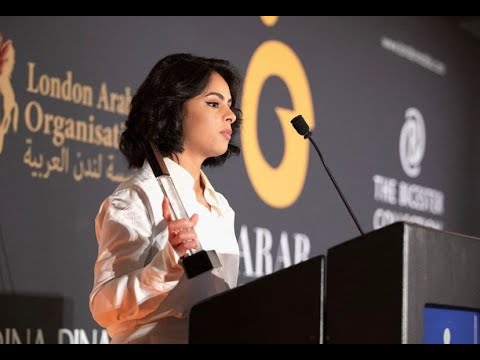
The 10 year old who awoke the world to a vital cause
Words by Abi Scaife She was only ten years old when she changed the world – and today, aged 20, Nada Alahdal shows no signs of slowing.

Shocking Reality: Child Marriage on the Rise in Europe
Child marriage has been a prevalent issue in Europe for many years, although it may not be as widely discussed as in other parts of

Child Marriage on the Rise in Europe: What Can Be Done to Stop It?
Child marriage is a pressing issue that continues to affect many countries in Europe, despite efforts to combat it. The practice of forcing young girls