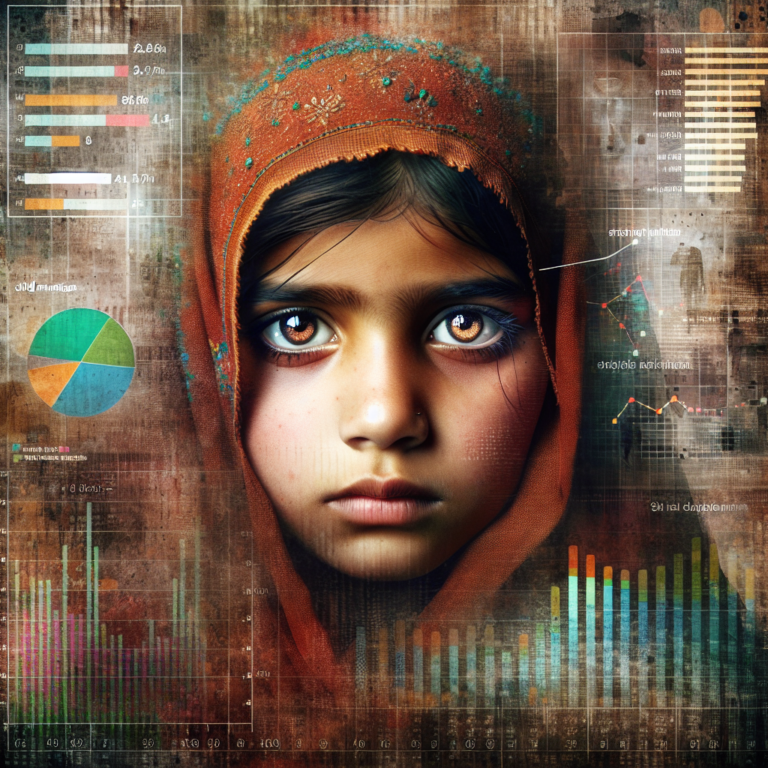
Child Marriage in the Middle East: Breaking the Chains of Tradition
Imagine a world where girls are denied their right to education, opportunity, and a childhood free of responsibilities. A world where their fate is determined by cultural norms and tradition, rather than their own aspirations and dreams. Unfortunately, this is the reality for many young girls in the Middle East, where child marriage continues to be a pervasive issue.
In the Middle East, child marriage is deeply woven into the fabric of society, perpetuated by age-old norms and traditions. Girls as young as 10 or 11 are forced into marriage, often to much older men. This practice not only robs them of their childhood but also has severe physical and psychological consequences.
One common misconception is that child marriage is a religious requirement. However, it is important to note that child marriage is not exclusive to any particular religion. It is rather a complex web of cultural and societal factors that contribute to this harmful practice. Poverty, lack of education, and gender inequality are some of the key drivers behind child marriage in the region.
Poverty plays a significant role in perpetuating child marriage. Families living in poverty often see their daughters as a burden, and marrying them off at a young age is seen as a way to decrease their economic strain. However, the irony lies in the fact that child marriage often perpetuates the cycle of poverty, as these girls are denied the opportunity to pursue education and economic empowerment.
Lack of education also plays a critical role in child marriage. When girls are denied access to education, they are more likely to marry young. Education empowers girls, giving them the knowledge and skills to make informed decisions about their lives. It not only equips them for a better future but also exposes them to their rights and gives them a voice to advocate for themselves.
Gender inequality is another major factor contributing to child marriage. In many Middle Eastern societies, girls are seen as commodities rather than individuals with rights and autonomy. Their worth is often associated with their ability to bear children and fulfill their roles as wives and daughters-in-law. This perpetuates harmful gender norms, where girls are seen as inferior to boys, perpetuating a cycle of discrimination and inequality.
Breaking the cycle of child marriage requires a multifaceted approach. Governments must first and foremost enact and enforce legislation that sets a minimum age for marriage and protects the rights of girls. However, legislation alone is not enough. It is crucial to raise awareness about the negative consequences of child marriage and challenge the cultural norms that perpetuate it.
Communities and religious leaders play a pivotal role in this regard. By engaging with them and fostering dialogue, we can challenge the misconceptions surrounding child marriage and promote alternative practices that empower girls and prioritize their well-being. Education is key in this process, both formal and informal, as it enlightens minds and opens doors to new possibilities.
Every child deserves a childhood filled with laughter, love, and the opportunity to grow. It is our collective responsibility to break the chains of tradition and ensure that girls in the Middle East are given the chance to fulfill their potential. Together, we can create a future where child marriage is but a distant memory, and every girl is free to dream and pursue her aspirations.
Nada Alahdal
A human rights activist to advocate for the issue of child marriage, and head of the
for the Protection of Girls